Basement water problems rarely arrive all at once. They start small — a damp spot, a musty smell, a sump pump that runs a little more than it used to — and quietly get worse until a storm turns them into a real mess. Catching the early signs means you can waterproof on your schedule, not in a panic. Here are seven signs Milwaukee-area homeowners should take seriously.
1. Water at the Floor-Wall Joint
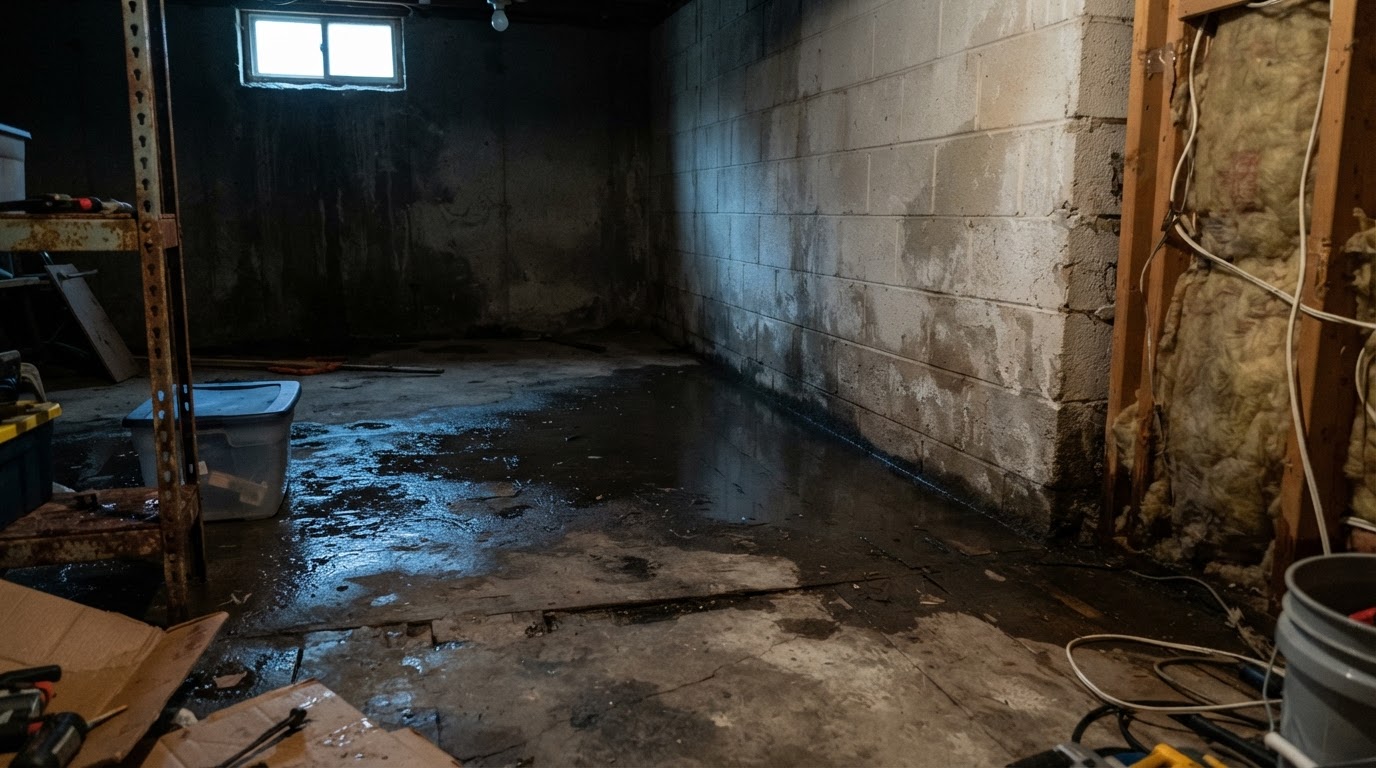
The most common first sign is seepage where the basement floor meets the wall. Water gets in because hydrostatic pressure builds up in the soil outside and pushes groundwater through the weakest point — usually that joint. If you see a dark line, mineral buildup (that white chalky stuff called efflorescence), or actual puddles along the base of the wall after rain or snowmelt, the drainage path around your foundation isn't doing its job.
2. Damp or Wet Walls
Walls that feel damp, look stained, or show peeling paint are absorbing water from the soil on the other side. Block walls are especially prone to this because water travels through the hollow cores. A wall that's wet to the touch isn't just a nuisance — it's a sign that moisture is moving through the foundation, and it will keep coming until the water source is managed.
3. Musty Smells and Mold
A musty basement smell is mold and mildew feeding on moisture. You don't need standing water to have a humidity problem — damp walls and a poorly ventilated space are enough. If the smell returns every time it rains, or gets worse in summer, the basement is holding more moisture than it should. Encapsulating or waterproofing addresses the source instead of just masking the odor.
4. A Sump Pump That Runs Constantly
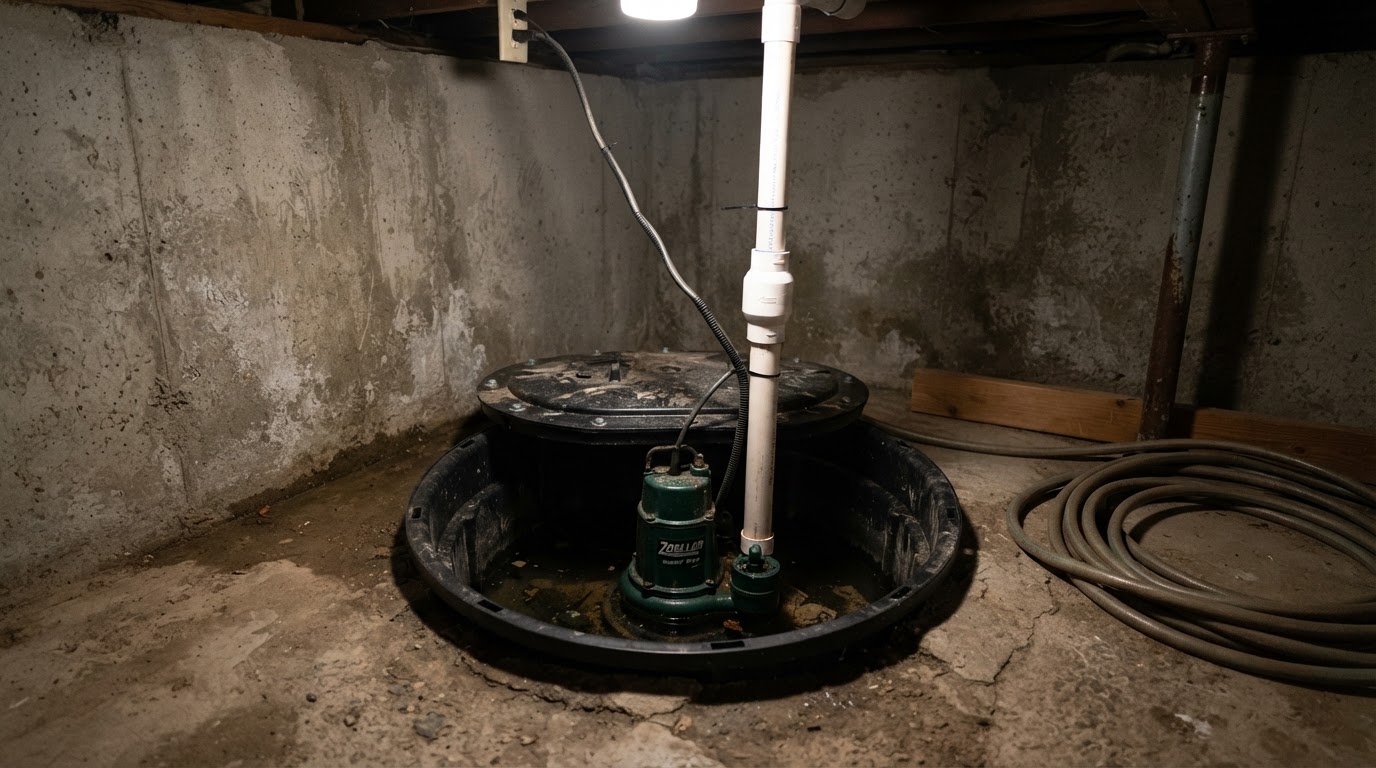
A sump pump that cycles constantly, or runs for long stretches even when it's dry out, is telling you there's a lot of water making its way to the basin. Sometimes the pump itself is fine and the problem is the volume of water — which means the drainage around the foundation needs help. If the pump runs nonstop after every storm, read our guide on sump pumps that run constantly.
5. Cracked or Crumbling Walls
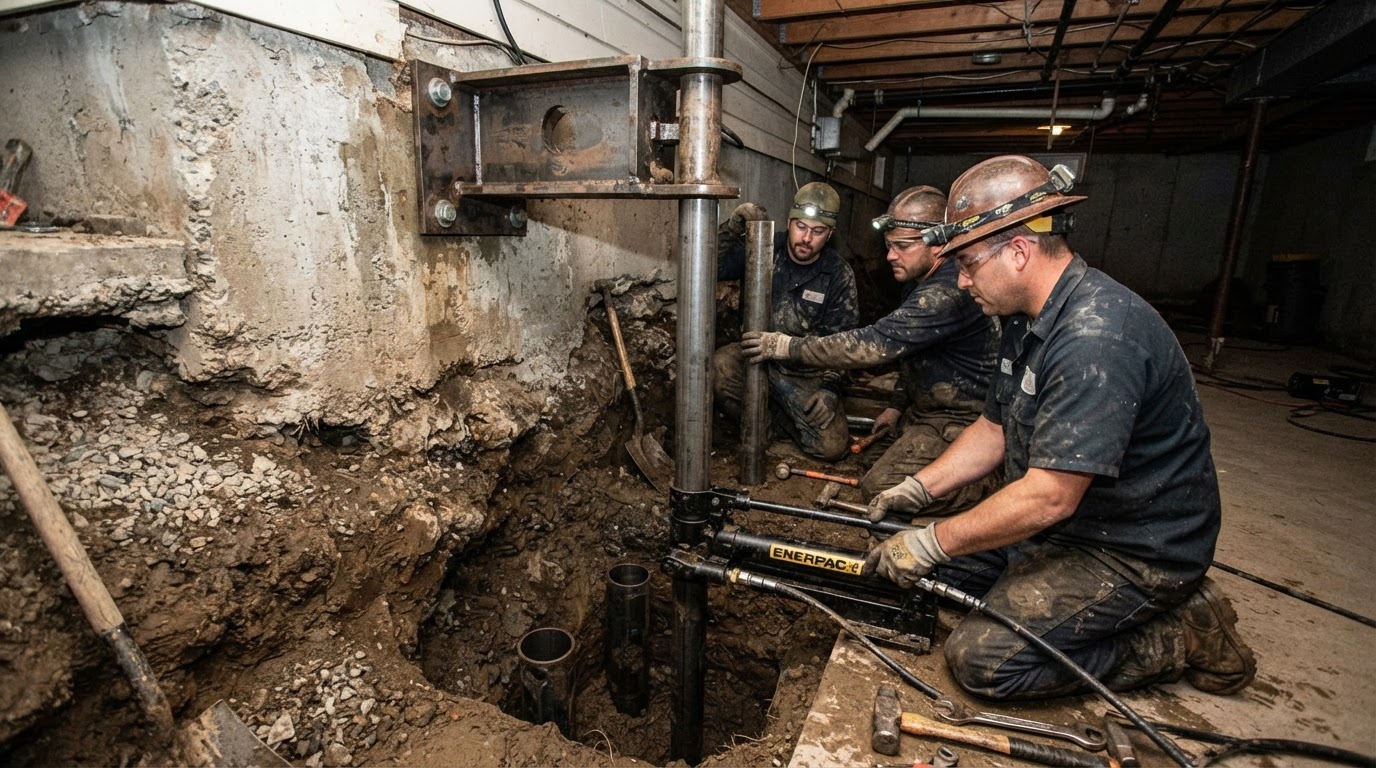
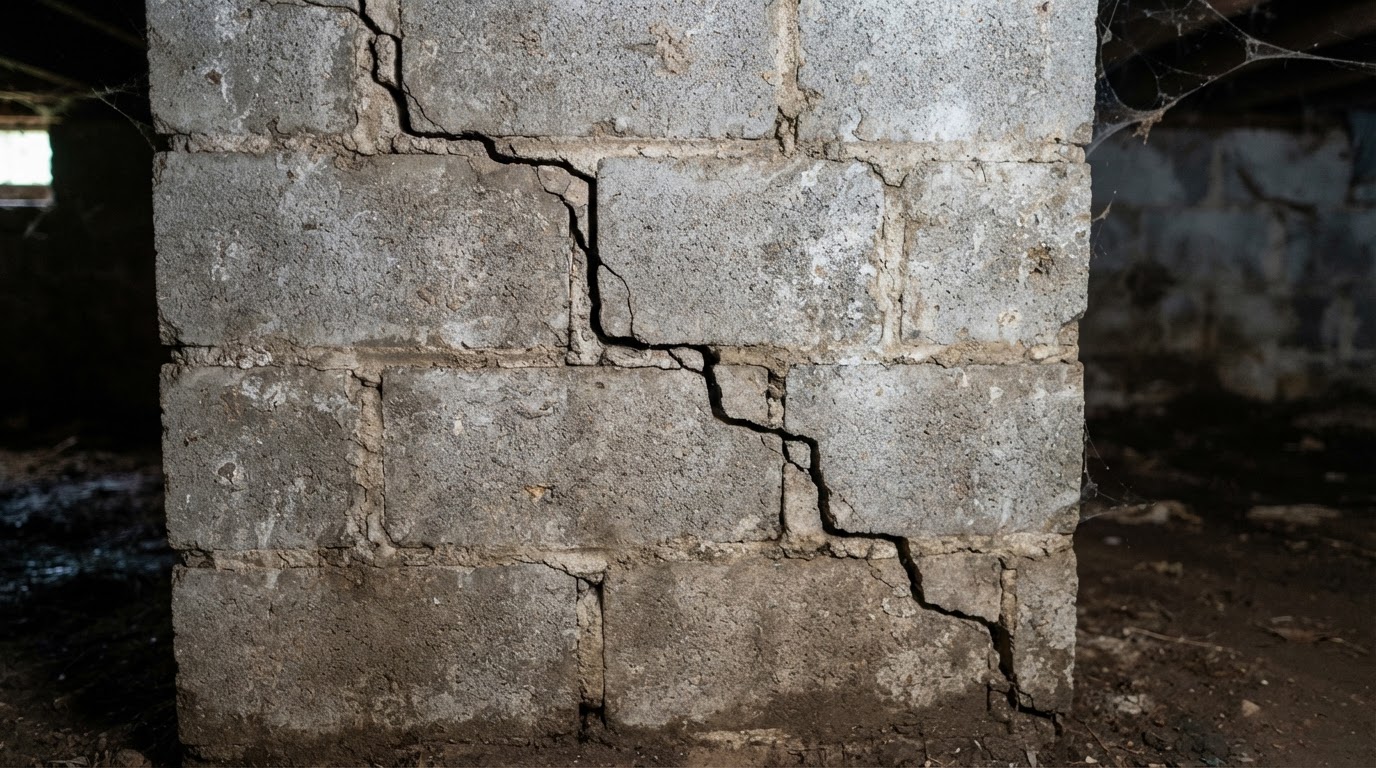
Water and soil pressure together damage basement walls over time. Horizontal cracks, stair-step cracks in block, and spalling (the surface of the concrete flaking off) often go hand in hand with water problems. If you see cracks and dampness together, the water is likely part of the cause — waterproofing relieves the pressure that's driving both.
6. Wet or Rotting Items on the Floor
Cardboard boxes that go soft, rust on the bottom of metal shelving, and warped bottom edges of stored furniture all mean the basement floor and air are wetter than you think. By the time belongings are damaged, the humidity has been high for a while. It's a clear signal that the space needs better moisture control.
7. Water in the Window Wells
Window wells that fill with water, leaves, or snow and then leak into the basement are a common entry point — especially on older homes with ground-level basement windows. If the wells aren't draining, water pools against the window and eventually finds its way in. Clearing and properly draining the wells is often part of a complete waterproofing plan.
What to Do If You See These Signs
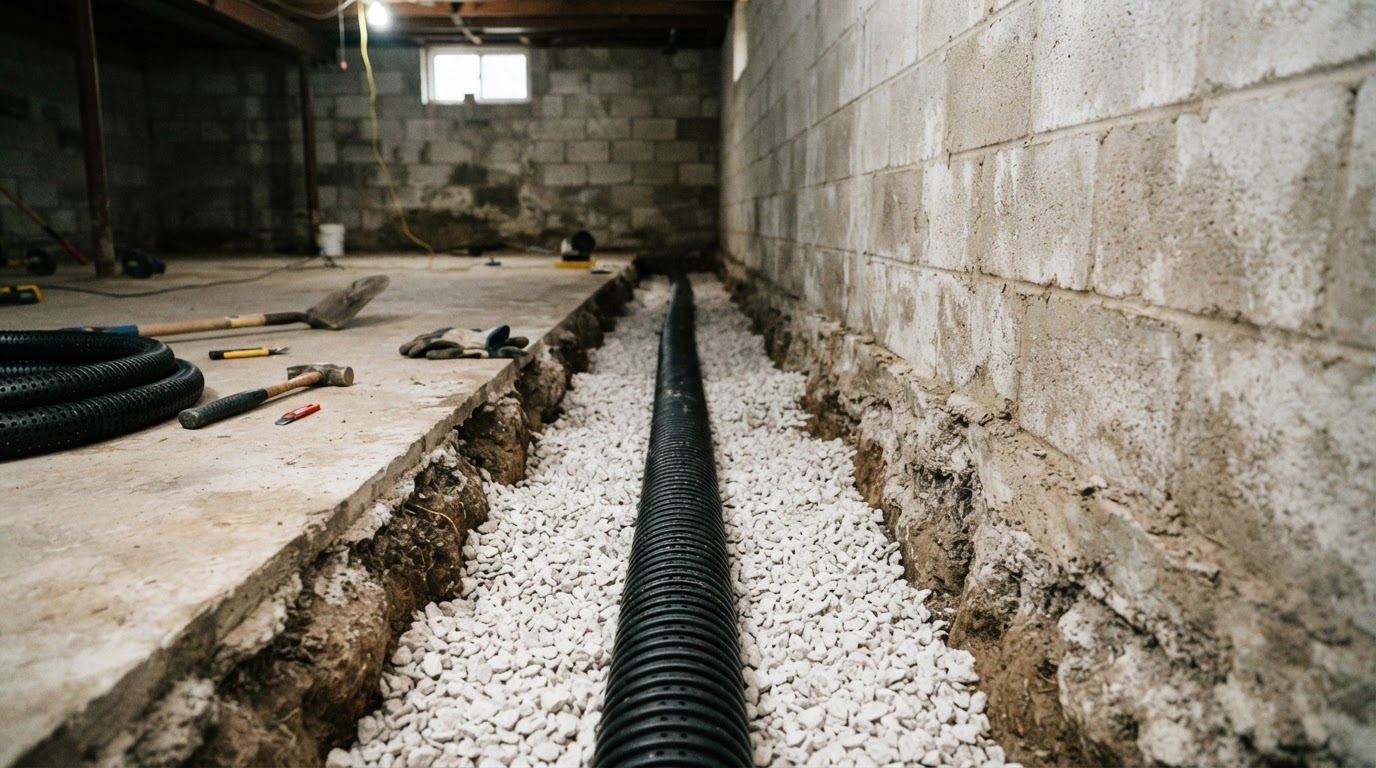
One sign might be a minor issue; three or more usually mean it's time for a professional look. The good news is that waterproofing is almost always less expensive the earlier you catch it, because you're managing water before it damages walls, finishes, and belongings. A free inspection tells you whether you need a full drain tile system, a targeted fix, or just better gutters and grading.
Frequently Asked Questions
Is a little water in the basement normal?
A little dampness in an older basement is common, but it's not something to ignore. Even small, occasional seepage means water is finding a path in, and that path tends to widen over time. If you see water more than once or twice a year, or after ordinary rain rather than a major storm, it's worth having it looked at before it damages finishes or stored items.
Can I just run a dehumidifier instead of waterproofing?
A dehumidifier manages humidity in the air, but it doesn't stop water from entering through the walls or floor. If you have actual seepage, a dehumidifier is working overtime to dry water that keeps coming in. Waterproofing fixes the source; a dehumidifier is a good complement, not a replacement, when water is actively entering.
How long does basement waterproofing last?
A properly installed interior drain tile system with a good sump pump is a long-term fix designed to last for decades, though the pump itself will eventually need replacement. Targeted fixes like sealing a crack or regrading depend on whether the underlying drainage issue is resolved. We explain the expected lifespan for your specific fix at the inspection.