Wauwatosa's Local Specialists
Structural Foundation Repair in Wauwatosa, WI
Call now for a free inspection and honest answers about your home.
Foundation Repair in Wauwatosa, WI
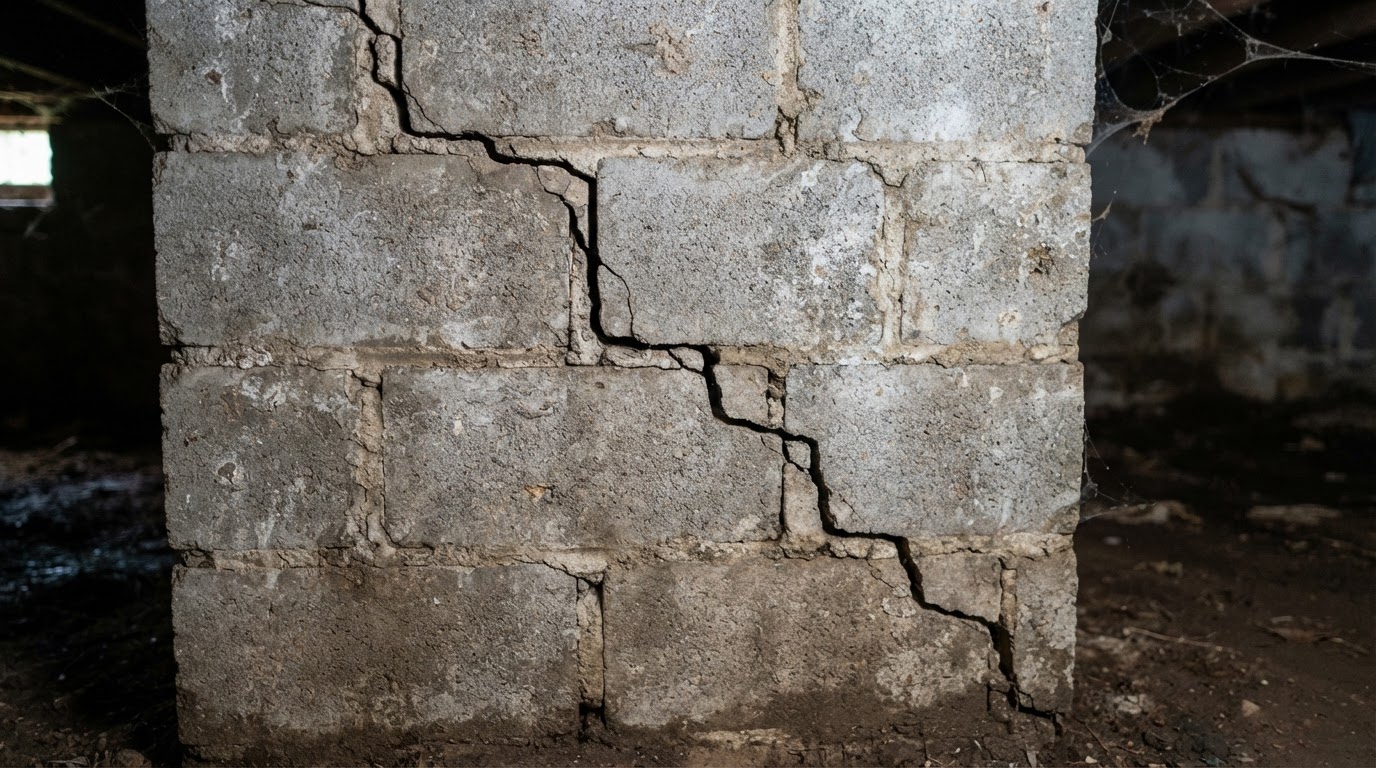
Structural foundation repair is what we do when a foundation wall is being pushed inward — bowing, leaning, or bulging. You'll often see it as a horizontal crack along a mortar joint in a concrete block wall, a wall that's no longer plumb, or a wall sliding in at the bottom or tipping at the top. The fix depends on how far the wall has moved: steel beam bracing, wall anchors, or carbon fiber reinforcement can stabilize many walls without rebuilding, while a wall that's moved too far may need to be excavated and straightened or rebuilt. This page is about walls moving inward; if your home is sinking or settling unevenly, that's a different problem we cover on our foundation settling repair page.
Proud to Serve Wauwatosa & Greater Milwaukee
We help homeowners across Wauwatosa and the surrounding Milwaukee County and Waukesha County communities.
What's Included
Steel beam bracing
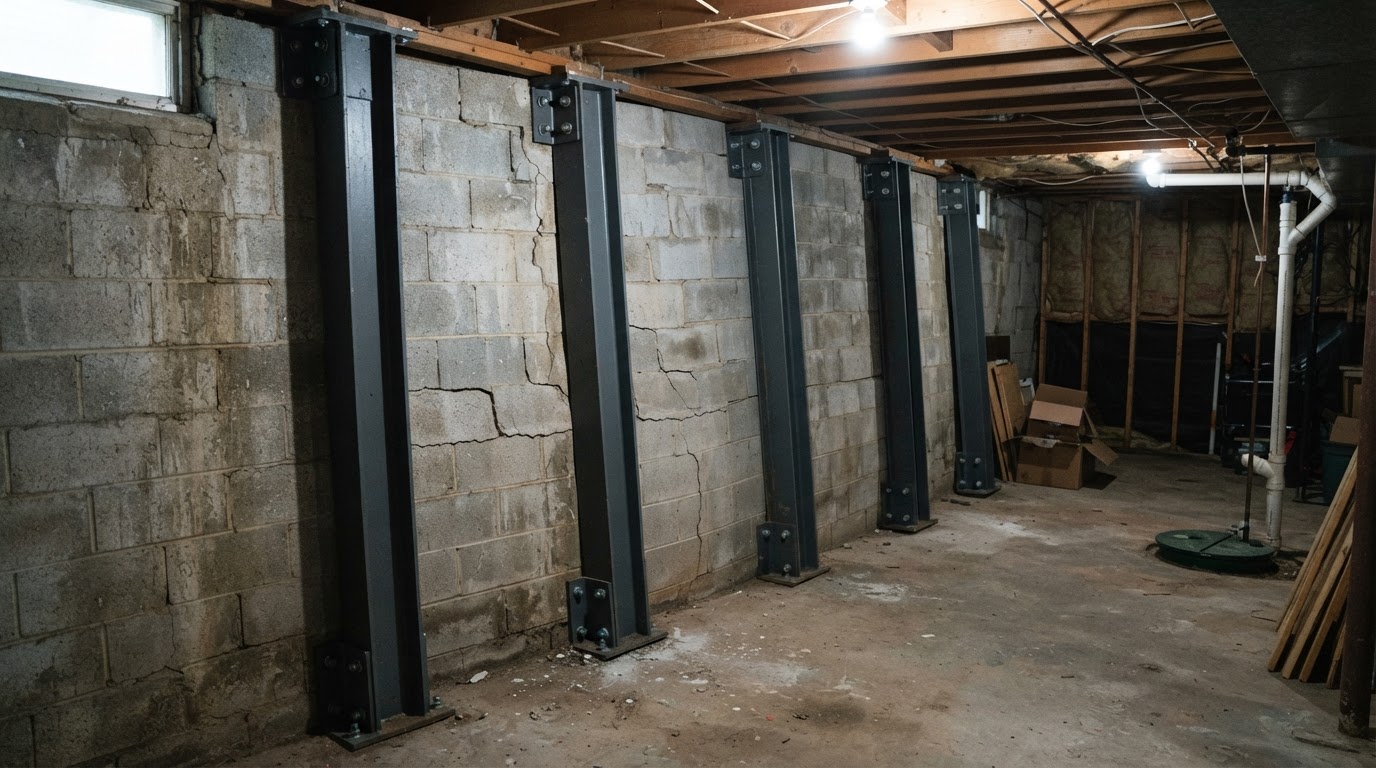
Vertical steel I-beams anchored floor-to-ceiling to brace a bowing block wall and stop inward movement.
Wall anchors
Earth anchors in the yard connected to wall plates to pull a bowed wall back and hold it plumb.
Carbon fiber reinforcement
High-strength carbon fiber straps bonded to the wall to stabilize moderate bowing with a low profile.
Excavation & straightening
Walls excavated from the outside, pushed back toward plumb, and stabilized when movement is severe.
Wall rebuilding
Walls that have failed or moved too far rebuilt with new block and proper reinforcement.
Why This Happens in Wauwatosa
Bowing and leaning walls are common in Wauwatosa and Greater Milwaukee, and the local soil is the main driver. Southeastern Wisconsin sits on glacial till with heavy clay that holds water against basement walls and swells when wet, so the soil pushes hard inward — what engineers call lateral pressure. Winters are long and the ground freezes several feet deep, so frozen, saturated soil pushes even harder, and repeated freeze-thaw cycles widen the horizontal cracks that signal a wall is giving way. Spring snowmelt and intense summer thunderstorms saturate the clay quickly, and the area has seen severe flooding from storms like those in July 2010 and August 2025. Much of the housing in Wauwatosa, West Allis, Shorewood, and Milwaukee dates from the 1910s to the 1950s, with concrete-block basement walls that are especially vulnerable to this inward pressure — block walls bow along a mortar joint long before poured walls would. Brookfield, Elm Grove, and Fox Point have more mid-century and newer homes, but their block walls face the same clay and freeze-thaw.
How to Help Prevent It
- Keep gutters clean and extend downspouts well away from the house so the clay soil against the wall doesn't stay saturated.
- Grade soil away from the foundation to reduce the lateral pressure that bows walls inward.
- Watch for horizontal cracks along mortar joints and any wall that looks like it's bowing — measure it over time.
- Address seepage and drainage early so water doesn't build up hydrostatic pressure against the wall.
- Have a bowing wall inspected promptly — early bracing is far less costly than excavation or rebuilding.
Cost Guide
Every home is different, so we price every job after a free inspection. Here's what shapes the cost.
| Repair type | Typical price | What affects cost |
|---|---|---|
| Steel beam bracing (per wall) | Free quote after inspection | Driven by wall length, number of beams needed, and floor/ceiling anchoring. |
| Wall anchor system | Free quote after inspection | Depends on number of anchors, yard access for excavation, and how far the wall has moved. |
| Carbon fiber reinforcement | Free quote after inspection | Lower-profile option for moderate bowing; cost depends on wall area and number of straps. |
| Excavation, straightening & rebuilding | Free quote after inspection | The most involved fix; cost scales with wall length, depth, and whether the wall is rebuilt. |
Why Choose Us for Foundation Repair
Right fix for how far it's moved
Beams, anchors, carbon fiber, or rebuilding — matched to the wall, not a one-size answer.
Often no rebuild needed
We stabilize most bowing walls without tearing them out when caught early.
Built for local clay pressure
We design bracing for the heavy soil and freeze-thaw that push walls here.
Clear written estimate
You see the method, the scope, and the price before we start.
Get Your Free Estimate
No obligation. We'll take a look and give you straight answers about your foundation or basement.
Our Process
- 1
You call or request an estimate, and we schedule a free inspection.
- 2
We measure how far the wall has moved, map the cracks, and assess whether it can be braced or needs straightening.
- 3
We recommend steel beams, wall anchors, carbon fiber, or excavation, with a written quote.
- 4
We install the bracing or perform the excavation and straightening, and document the wall's position.
- 5
We leave you with a record of what was done and what to watch going forward.
Foundation Repair FAQ
Can a bowing block wall be fixed without rebuilding it?
Yes, in most cases — if it's caught before the wall has moved too far. Steel beam bracing, wall anchors, and carbon fiber reinforcement can stabilize a bowing or leaning block wall without tearing it out. Rebuilding is usually reserved for walls that have pushed in past a certain point or are actively failing. The earlier we look, the more options you have and the less it tends to cost.
What's the difference between steel beams, wall anchors, and carbon fiber?
Steel I-beams brace the wall from the inside, floor to ceiling, and stop further movement. Wall anchors run from the wall out into the yard and can actively pull a bowed wall back toward plumb. Carbon fiber straps bond to the wall and stabilize moderate bowing with a very low profile. We pick based on how far the wall has moved, whether you want it pulled back, and whether yard access allows anchors.
Is a horizontal crack in my block wall the same as settling?
No. A horizontal crack along a mortar joint in a block wall is a sign the wall is being pushed inward by soil pressure — a lateral, not a vertical, problem. Settling is the home sinking down, which shows up as sloping floors and stair-step cracks. They're different problems with different fixes. If yours is downward movement, see our foundation settling repair page.
When does a wall need to be rebuilt?
Rebuilding is usually the last option, reserved for walls that have moved well past what bracing can hold, walls that are actively collapsing, or walls where the block has sheared or failed. In most homes we see, the wall can be braced or anchored and stabilized without rebuilding — which is why catching it early matters. We'll tell you honestly whether your wall can be saved with bracing or needs more.
Our Other Services
One local team for the full range of foundation, basement, and crawl space work.
Request Your Free Estimate
Tell us what's going on and we'll get back to you quickly. No obligation, no pressure — just straight answers about your home.
Prefer to talk? Call (414) 386-5999.
Your details are used only to contact you about your project.