Wauwatosa's Local Specialists
Crawl Space Encapsulation in Wauwatosa, WI
Call now for a free inspection and honest answers about your home.
Crawl Space Encapsulation in Wauwatosa, WI
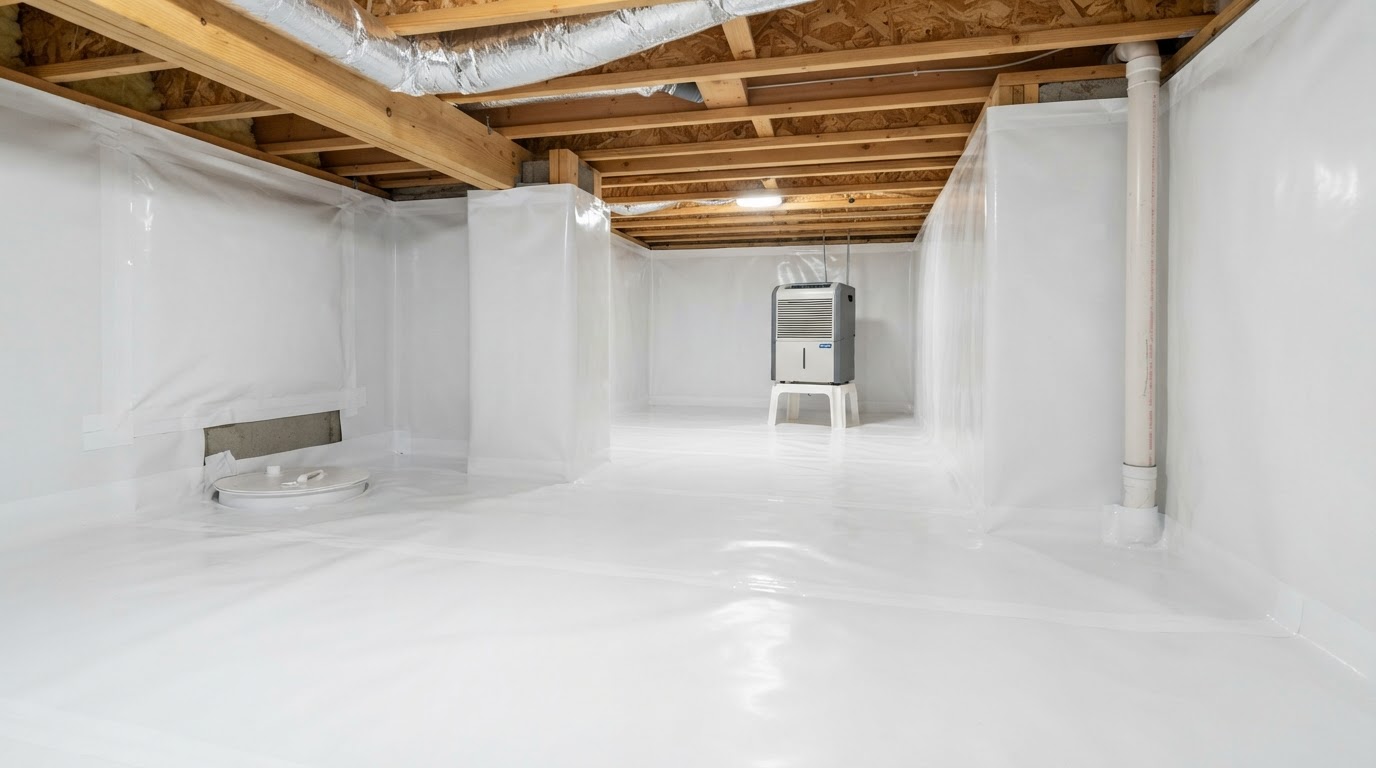
Crawl space encapsulation seals a dirt or vented crawl space with a heavy-duty vapor barrier, closes the vents, and adds a dehumidifier to control moisture. What it fixes is everything that damp crawl space air causes: humidity, mold, musty smells, pests, cold floors above, frozen pipes, and higher energy bills. To be straight with you, crawl spaces are less common in this area than full basements — nearly every home here has a full basement. Where we do find crawl spaces is under additions, sunrooms, porches, and some postwar homes. If yours is damp or musty, encapsulation is usually the right fix, and we'll tell you honestly whether your space needs it.
Proud to Serve Wauwatosa & Greater Milwaukee
We help homeowners across Wauwatosa and the surrounding Milwaukee County and Waukesha County communities.
What's Included
Heavy-duty vapor barrier
Reinforced liner covering the floor and walls to seal ground moisture out of the space.
Vent sealing
Vents closed and sealed so humid outside air stops cycling through the crawl space.
Dehumidifier installation
Properly sized dehumidifier to keep humidity controlled and prevent mold and musty smells.
Insulation
Wall and rim-joist insulation to keep floors above warm and cut energy loss.
Moisture & mold cleanup
Damp or moldy conditions addressed before the space is sealed so the problem isn't trapped inside.
Why This Happens in Wauwatosa
Crawl spaces in the Wauwatosa area behave differently than in warmer, drier parts of the country, and the soil is a big reason. Southeastern Wisconsin sits on glacial till with heavy clay that holds moisture, so a dirt crawl space stays damp even when it hasn't rained. Winters are long and the ground freezes several feet deep, so an unsealed crawl space lets cold air reach the floor above, making floors cold and, in harsh winters, risking frozen pipes. Spring snowmelt and intense summer thunderstorms saturate the ground quickly, and that moisture migrates up into an unsealed space as humidity — then mold and musty smells follow. We're honest about this: crawl spaces are less common here than full basements, and they're usually found under additions, sunrooms, porches, and some postwar homes rather than under the main house. When one is present and damp, encapsulation is usually the right call.
How to Help Prevent It
- Make sure water drains away from the crawl space — extend downspouts and grade soil away from the foundation.
- Keep any vents closed in humid and cold weather so outside air doesn't cycle through the space.
- Run a dehumidifier if the space has one, and check that it's draining properly.
- Watch for musty smells upstairs — they often trace back to a damp crawl space below.
- Have the space inspected before winter so cold floors and frozen pipes don't catch you off guard.
Cost Guide
Every home is different, so we price every job after a free inspection. Here's what shapes the cost.
| Repair type | Typical price | What affects cost |
|---|---|---|
| Full encapsulation (vapor barrier + vent sealing) | Free quote after inspection | Driven by crawl space square footage, liner grade, and number of vents to seal. |
| Dehumidifier installation | Free quote after inspection | Depends on unit size, drainage routing, and whether power needs to be run. |
| Insulation addition | Free quote after inspection | Cost depends on wall and rim-joist area and the insulation type used. |
| Moisture/mold prep before sealing | Free quote after inspection | Needed when existing damp or mold must be addressed before the liner goes down. |
Why Choose Us for Crawl Space Encapsulation
Honest about whether you need it
We won't sell encapsulation on a space that doesn't need it — and we'll say so.
Right for local conditions
We size barriers and dehumidifiers for clay soil, cold winters, and humid summers.
Sealed tight, done right
Vents closed, liner sealed at the seams, and humidity controlled — not a half job.
Clear written estimate
You see the full scope and price before any work starts.
Get Your Free Estimate
No obligation. We'll take a look and give you straight answers about your foundation or basement.
Our Process
- 1
You call or request an estimate, and we schedule a free inspection of the crawl space.
- 2
We assess moisture, venting, insulation, and any mold, and explain whether encapsulation is the right fix.
- 3
We give you a written quote covering the liner, vent sealing, dehumidifier, and any prep work.
- 4
We clean and prep the space, install the vapor barrier, seal the vents, and add the dehumidifier and insulation.
- 5
We check humidity levels with you so you can see the space is dry before we leave.
Crawl Space Encapsulation FAQ
Do I need to encapsulate my crawl space?
If your crawl space has exposed dirt, open vents, humidity, musty smells, or cold floors above it, encapsulation usually helps. Sealing it with a heavy vapor barrier, closing the vents, and adding a dehumidifier controls the moisture that causes mold, pests, and higher energy bills. That said, crawl spaces are less common in this area than full basements — they're mostly under additions, sunrooms, porches, and some postwar homes. We'll tell you honestly whether yours needs it.
Why seal the vents — aren't crawl spaces supposed to breathe?
Older building science assumed venting a crawl space kept it dry, but in a humid climate the opposite happens: warm, moist outside air enters, hits cool surfaces, and condenses — feeding mold and rot. Sealing the vents and conditioning the space with a dehumidifier keeps humidity controlled instead. In our cold winters, sealed vents also stop cold air from chilling the floor above and risking frozen pipes.
Will encapsulation lower my energy bills?
It often helps, especially in winter. A sealed, insulated crawl space stops cold air from reaching the floor above, so the rooms over the crawl space stay warmer and your heating system works less. The dehumidifier uses some power, but the heating savings and the elimination of moisture damage usually outweigh it. We can't promise a specific dollar figure, but drier, warmer floors are a real benefit.
My crawl space is under an addition — is encapsulation different there?
It can be. Additions, sunrooms, and porches often have smaller, harder-to-reach crawl spaces with limited access, and they may share a wall with the main basement. We inspect the access, the size, and how it connects to the rest of the home before quoting, so the encapsulation is done right for that specific space rather than treated like a standard full-house crawl space.
Our Other Services
One local team for the full range of foundation, basement, and crawl space work.
Request Your Free Estimate
Tell us what's going on and we'll get back to you quickly. No obligation, no pressure — just straight answers about your home.
Prefer to talk? Call (414) 386-5999.
Your details are used only to contact you about your project.