Wauwatosa's Local Specialists
Basement Wall Crack Repair in Wauwatosa, WI
Call now for a free inspection and honest answers about your home.
Basement Wall Crack Repair in Wauwatosa, WI
Cracks in a basement wall are common in Wauwatosa-area homes, and most homeowners first notice them and wonder whether they're serious. This page is about the cracks themselves — vertical, diagonal, stair-step, and horizontal cracks in poured-concrete and concrete-block walls — which ones are cosmetic and which ones are structural, and how we inject and seal them. A hairline vertical crack in poured concrete is often nothing to worry about; a horizontal crack along a mortar joint in block usually is. We'll tell you honestly which you have. Once a wall is actually bowing or leaning, that's a structural issue we cover on our structural foundation repair page.
Proud to Serve Wauwatosa & Greater Milwaukee
We help homeowners across Wauwatosa and the surrounding Milwaukee County and Waukesha County communities.
What's Included
Crack diagnosis
Vertical, diagonal, stair-step, and horizontal cracks assessed for cosmetic vs. structural concern.
Epoxy crack injection
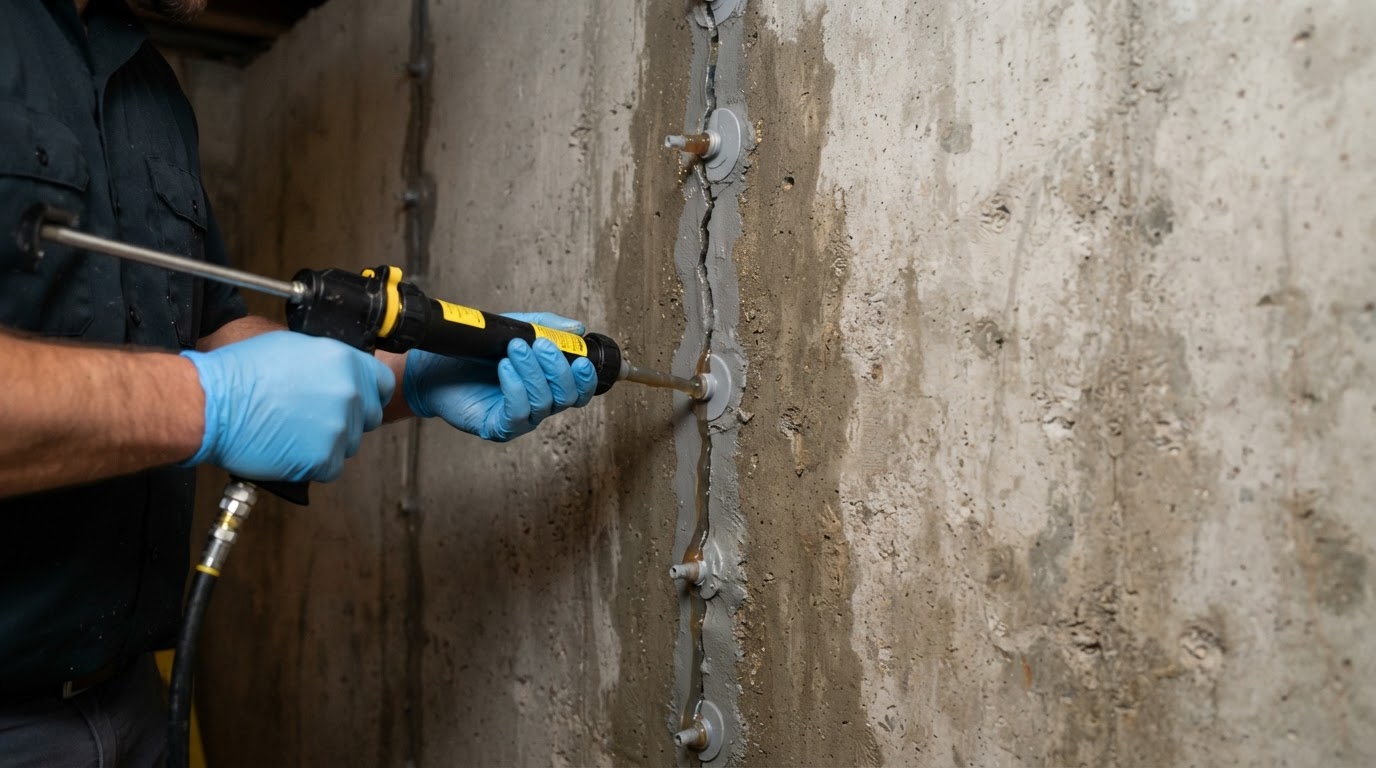
Two-part epoxy injected into poured-concrete cracks to restore strength and stop leaks.
Polyurethane sealing
Flexible polyurethane injection for actively leaking cracks that need to handle movement.
Block wall crack repair
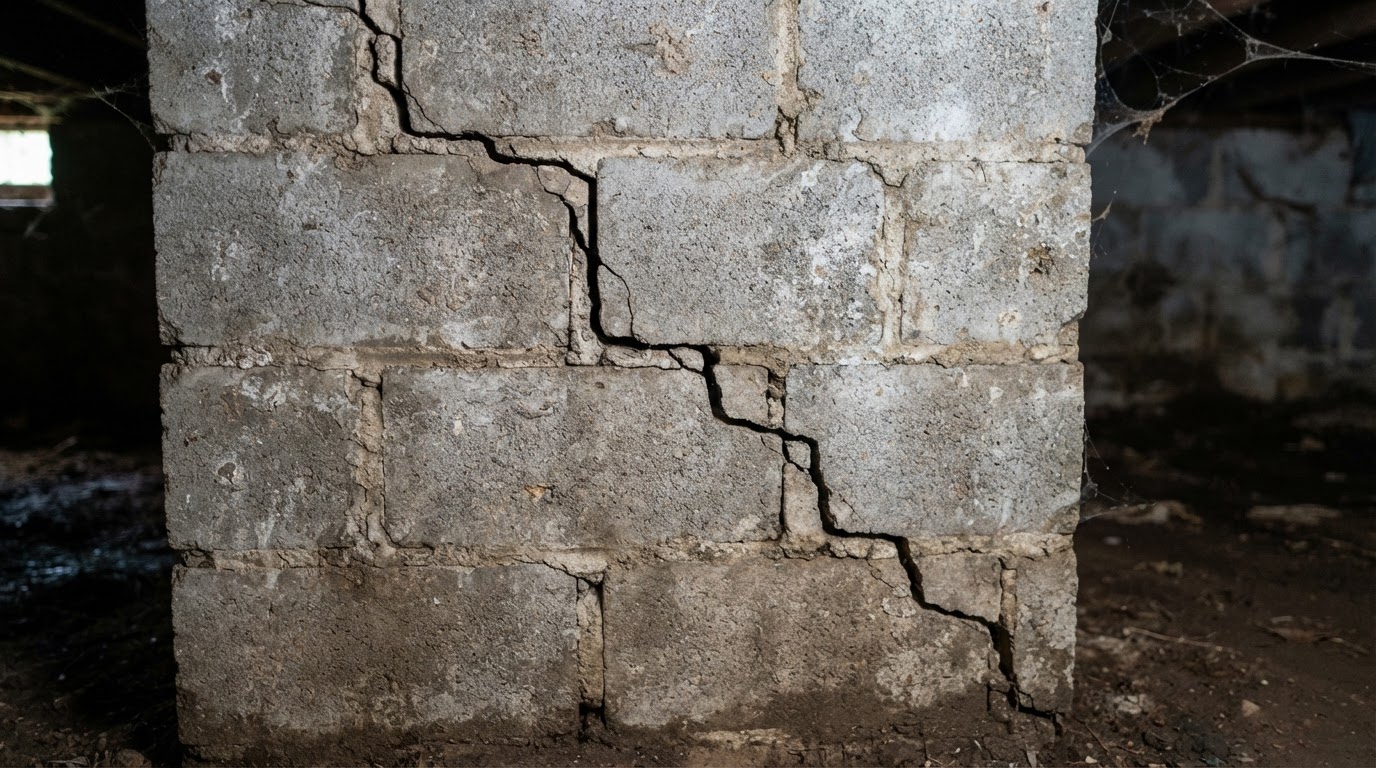
Stair-step and horizontal cracks in concrete block diagnosed and repaired or flagged for structural work.
Leaking crack sealing
Cracks that let water in sealed so the basement stays dry after rain and snowmelt.
Why This Happens in Wauwatosa
Basement wall cracks are common here because of the soil and the age of the homes. Southeastern Wisconsin sits on glacial till with heavy clay that holds water against basement walls and swells when wet, then shrinks when dry — that pressure cycle stresses walls and opens cracks over time. Winters are long and the ground freezes several feet deep, so frozen, saturated soil pushes hard on walls, and repeated freeze-thaw cycles widen cracks year after year. Much of the housing in Wauwatosa, West Allis, Shorewood, and Milwaukee dates from the 1910s to the 1950s, with concrete-block or early poured-concrete basement walls that have had decades to crack. Spring snowmelt and intense summer thunderstorms saturate the clay quickly and drive water through any crack that reaches the soil side. The key local distinction is the wall type: poured concrete tends to crack vertically (often cosmetic), while concrete block tends to crack horizontally along a mortar joint (often structural).
How to Help Prevent It
- Keep gutters clean and extend downspouts away from the house so water doesn't saturate the soil against the wall.
- Grade soil away from the foundation to reduce the hydrostatic pressure that opens and widens cracks.
- Watch for changes — measure crack width over time and note any new cracks, especially horizontal ones in block.
- Seal hairline cracks early before water finds its way through during spring thaw or storms.
- Have horizontal or widening cracks checked promptly, since early repair is far simpler than waiting.
Cost Guide
Every home is different, so we price every job after a free inspection. Here's what shapes the cost.
| Repair type | Typical price | What affects cost |
|---|---|---|
| Epoxy crack injection (poured concrete) | Free quote after inspection | Priced per crack; depends on crack length, width, and whether it's actively leaking. |
| Polyurethane sealing (leaking crack) | Free quote after inspection | Used for wet, moving cracks; cost depends on length and access. |
| Block wall crack assessment & repair | Free quote after inspection | Stair-step cracks may need sealing; horizontal cracks may point to structural bracing — see structural repair. |
| Multiple-crack package | Free quote after inspection | Several cracks in one visit lowers the per-crack cost; depends on count and type. |
Why Choose Us for Basement Wall Crack Repair
We tell you what's cosmetic
Not every crack needs repair — we'll say so honestly when it doesn't.
Right material for the crack
Epoxy for strength, polyurethane for leaking or moving cracks.
We flag structural cracks
If a crack signals bowing, we send you to the right fix instead of just sealing it.
Local wall-type knowledge
We know poured concrete vs. block and what each crack means in this area.
Get Your Free Estimate
No obligation. We'll take a look and give you straight answers about your foundation or basement.
Our Process
- 1
You call or request an estimate, and we schedule a free inspection.
- 2
We map every crack, measure its width, and identify the wall type and crack pattern.
- 3
We explain which cracks are cosmetic, which need sealing, and which point to a structural issue.
- 4
We inject or seal the cracks that need it using epoxy or polyurethane, and document the rest.
- 5
We clean up and leave you with a record of what was repaired and what to watch.
Basement Wall Crack Repair FAQ
Is a horizontal crack in a basement wall serious?
Often, yes. A horizontal crack along a mortar joint in a concrete block wall is a classic sign that the wall is being pushed inward by soil pressure — the same force that causes bowing. Unlike a hairline vertical crack in poured concrete, a horizontal crack in block usually points to a structural issue that tends to worsen over time. We'll seal it if it's leaking, but we'll also tell you if it needs structural bracing, which is covered on our structural foundation repair page.
What's the difference between a cosmetic crack and a structural one?
Hairline vertical cracks in poured concrete are usually cosmetic — the result of normal shrinkage and settling. Diagonal cracks from corners of windows or openings can go either way. Stair-step cracks in block may be cosmetic or may signal settling. Horizontal cracks in block are the ones most likely to be structural. Width matters too: cracks wider than about a quarter inch, or any crack that's growing, deserve a professional look.
What's the difference between epoxy and polyurethane injection?
Epoxy is a rigid two-part resin that restores the structural strength of a poured-concrete crack — best for dry, stable cracks. Polyurethane is flexible and expands, so it's the better choice for cracks that are actively leaking or might move slightly. We pick the material based on whether the crack is leaking, whether it's still moving, and whether strength or flexibility matters more.
My crack is leaking — can you fix it from the inside?
In most cases, yes. Epoxy or polyurethane injection is done from the inside and seals the crack through the full wall thickness, stopping the leak without digging outside. It's one of the least invasive waterproofing fixes. If the crack is part of a bigger drainage problem, we'll tell you so and point you to the right solution rather than just sealing it and walking away.
Our Other Services
One local team for the full range of foundation, basement, and crawl space work.
Request Your Free Estimate
Tell us what's going on and we'll get back to you quickly. No obligation, no pressure — just straight answers about your home.
Prefer to talk? Call (414) 386-5999.
Your details are used only to contact you about your project.