Of all the cracks you can find in a basement wall, a horizontal crack is the one that deserves the most attention. Vertical and diagonal cracks are often cosmetic, but a horizontal crack usually means the wall is being pushed inward by pressure from the soil outside. The good news is that bowing walls can almost always be repaired — but the sooner you act, the more options you have. Here's how to tell whether your horizontal crack is serious.
Why a Horizontal Crack Is Different
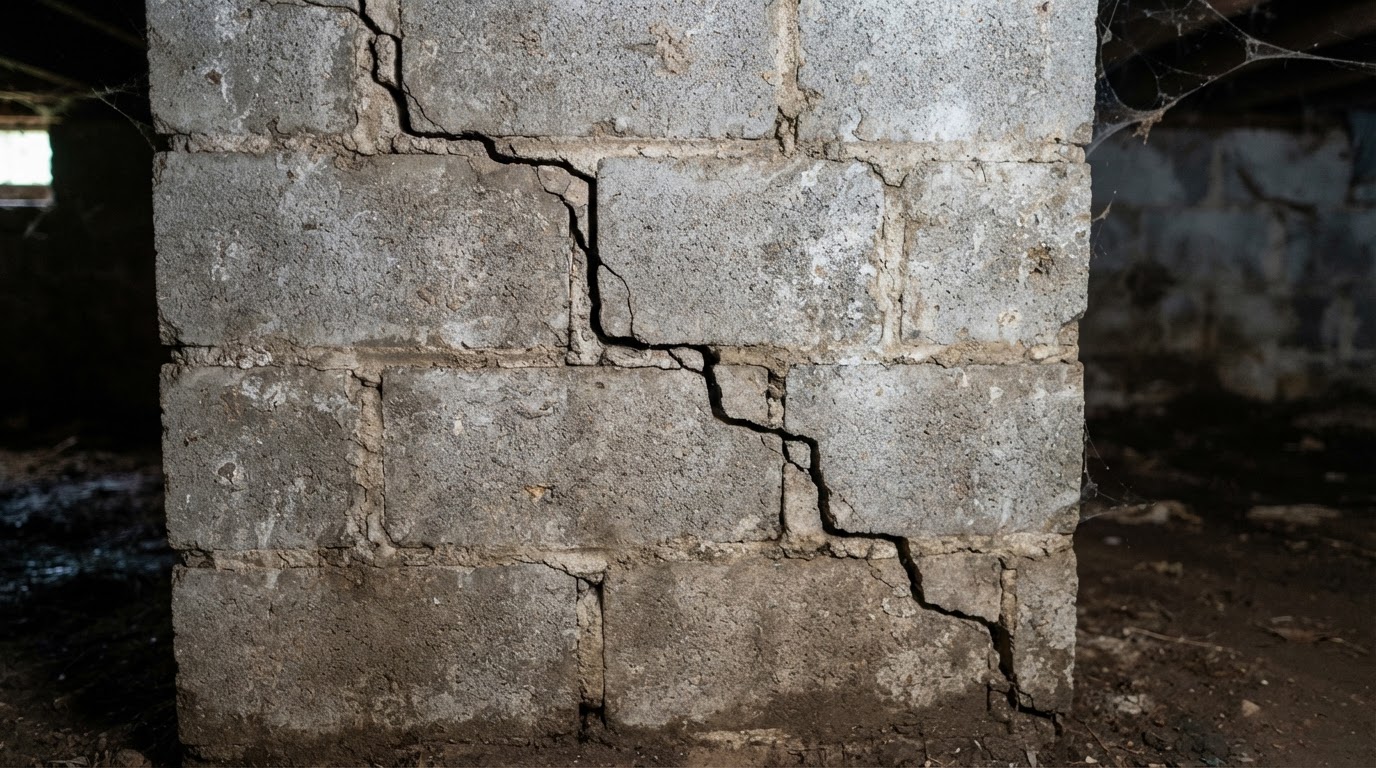
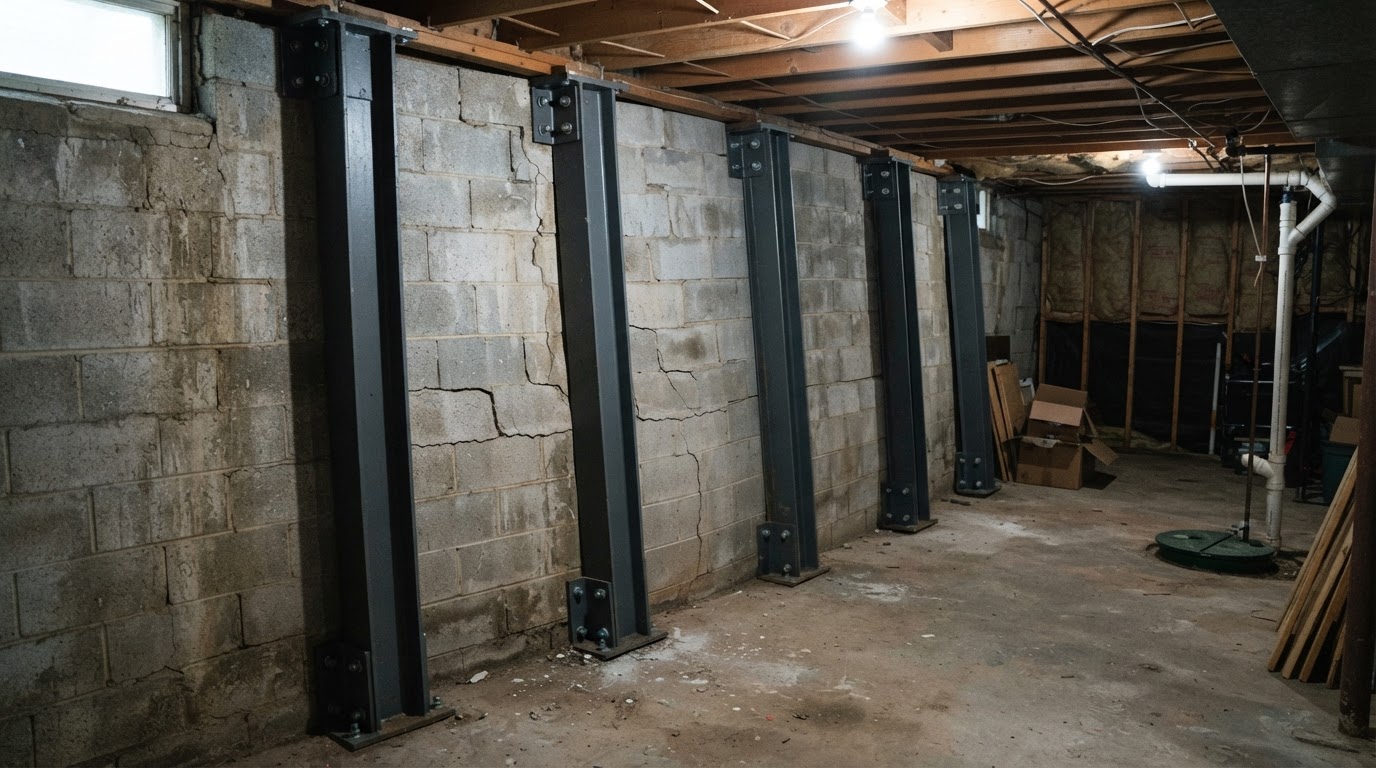
Basement walls crack for different reasons, and the direction of the crack tells you a lot. Vertical cracks in poured concrete often come from normal shrinkage as the concrete cures. Diagonal cracks can come from settling. But a horizontal crack — especially one running along a mortar joint in a block wall — is almost always a sign of lateral pressure: the soil outside is pushing the wall inward, and the wall is beginning to bow.
As the wall bows, the mortar joint cracks horizontally at the point of greatest stress, usually in the lower third of the wall where the soil pressure is highest. The crack is a warning that the wall is moving. Left alone, the bowing worsens, the crack widens, and eventually the wall can tip or collapse inward.
How to Tell How Serious It Is
Three things tell you how much to worry: the width of the crack, how far the wall has bowed inward, and whether it's getting worse. A hairline horizontal crack with no measurable bow is a warning sign worth monitoring. A crack wider than a quarter inch, or a wall that has bowed inward more than about an inch, needs professional attention soon. Use a straight board held against the wall to see how much it has pushed in.
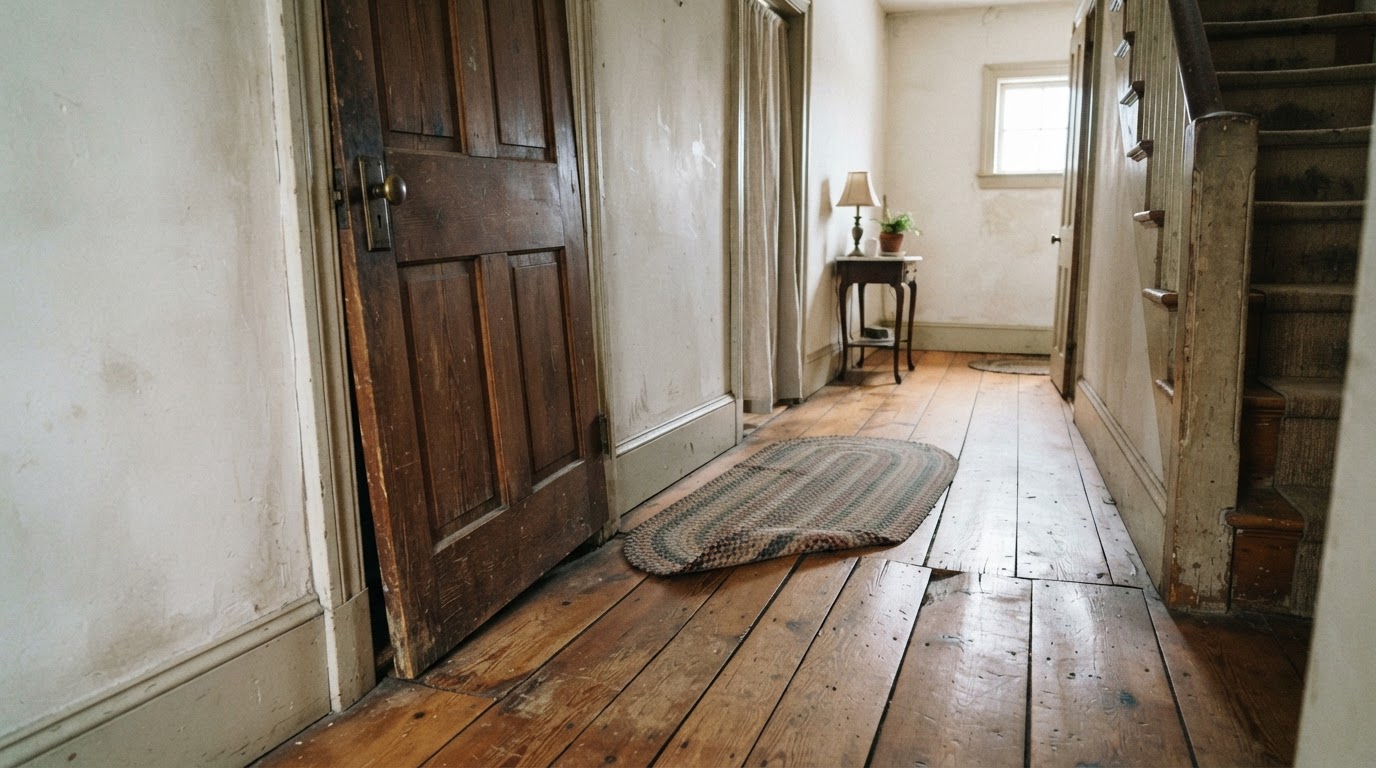
Also watch for cracks that are growing, walls that are bowing in at the bottom or tipping at the top, and any horizontal crack combined with stair-step cracks nearby. Those patterns together mean the wall is actively moving. The sooner you stabilize it, the less invasive the repair tends to be.
What Causes the Pressure in Wauwatosa Homes
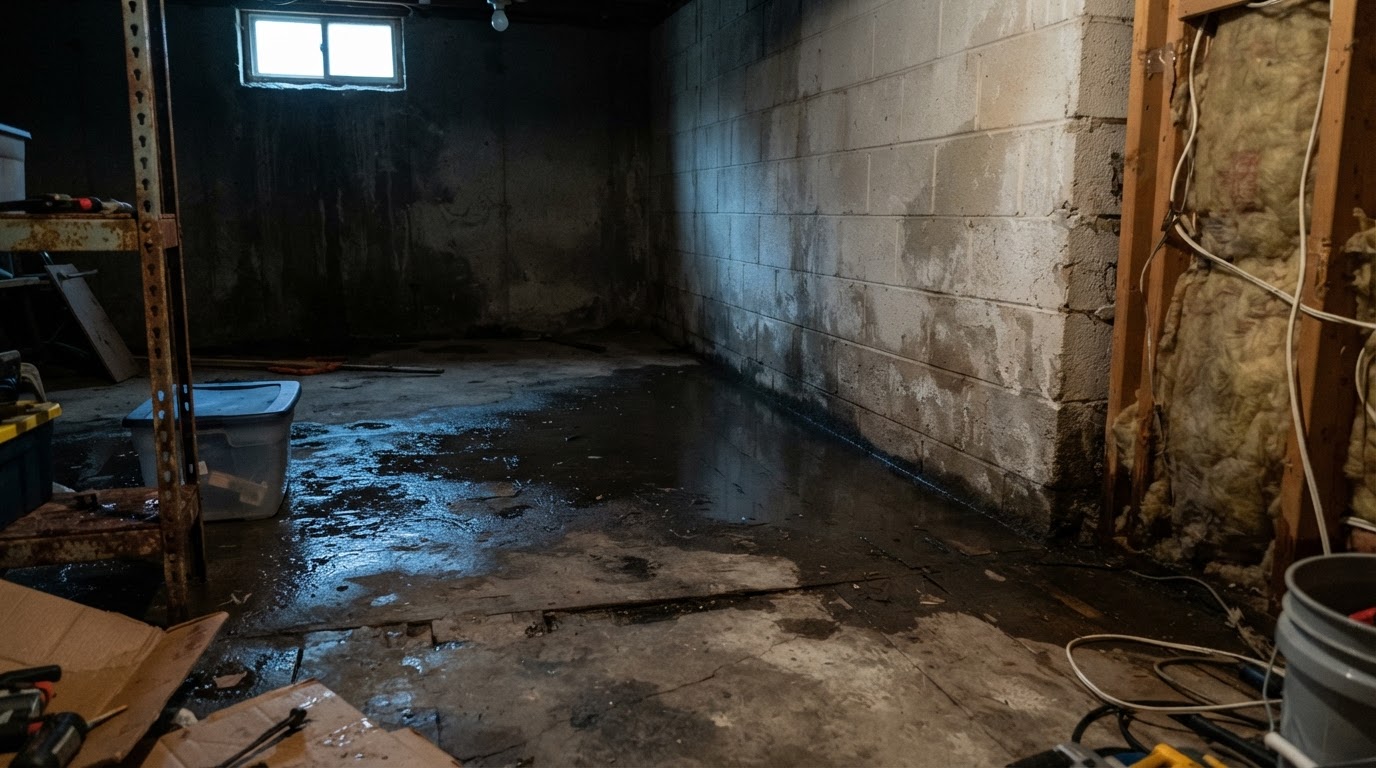
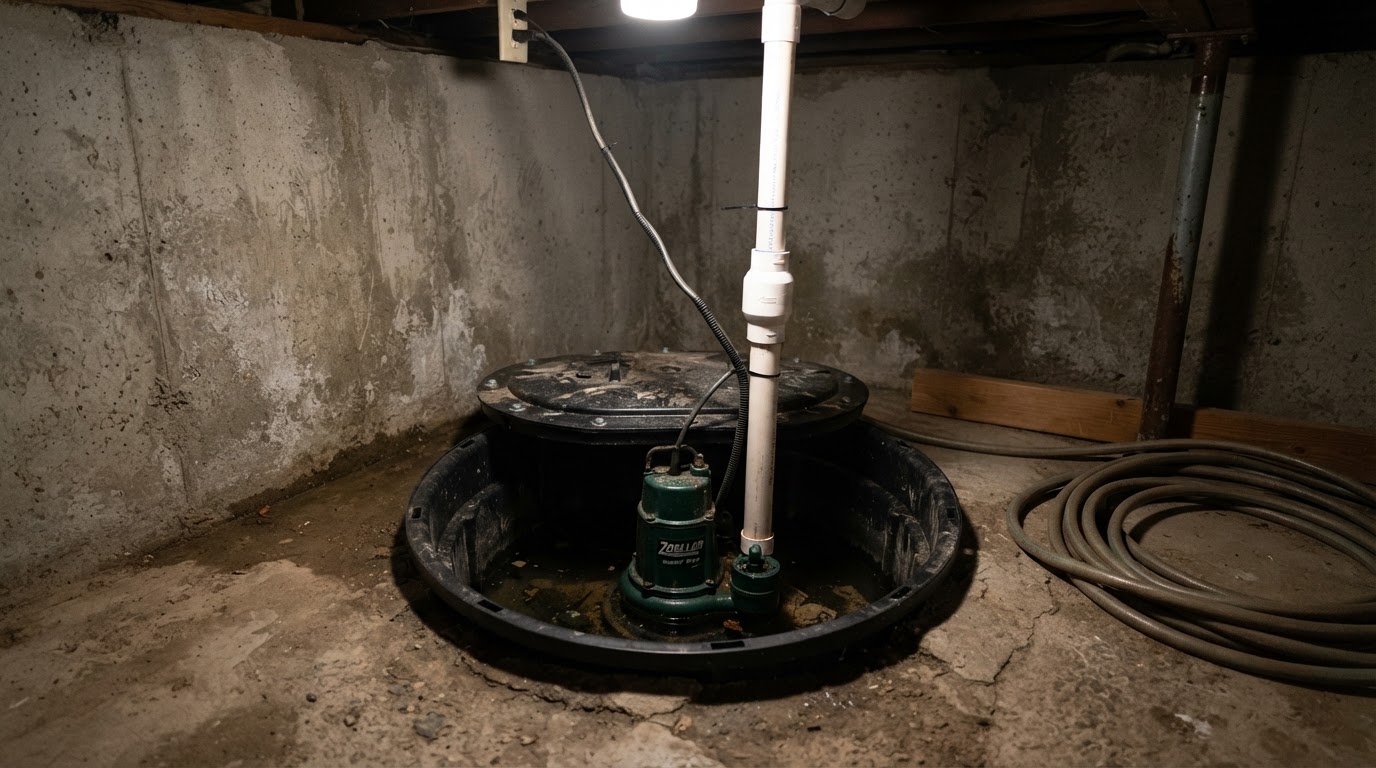
In this part of southeastern Wisconsin, the heavy glacial clay soil holds a lot of water against foundation walls. When that soil freezes, it expands and pushes hard on the wall. Repeated freeze-thaw cycles over many winters widen cracks year after year. Spring snowmelt and summer storms saturate the soil quickly, and poor drainage — clogged gutters, short downspouts, soil graded toward the house — makes the pressure worse.
Older Wauwatosa basements, many built with concrete block from the 1910s to the 1950s, are especially vulnerable because block walls bow more easily than poured concrete when the mortar joints give way. That's why horizontal cracks are common here and why they shouldn't be ignored.
How a Bowing Wall Gets Repaired
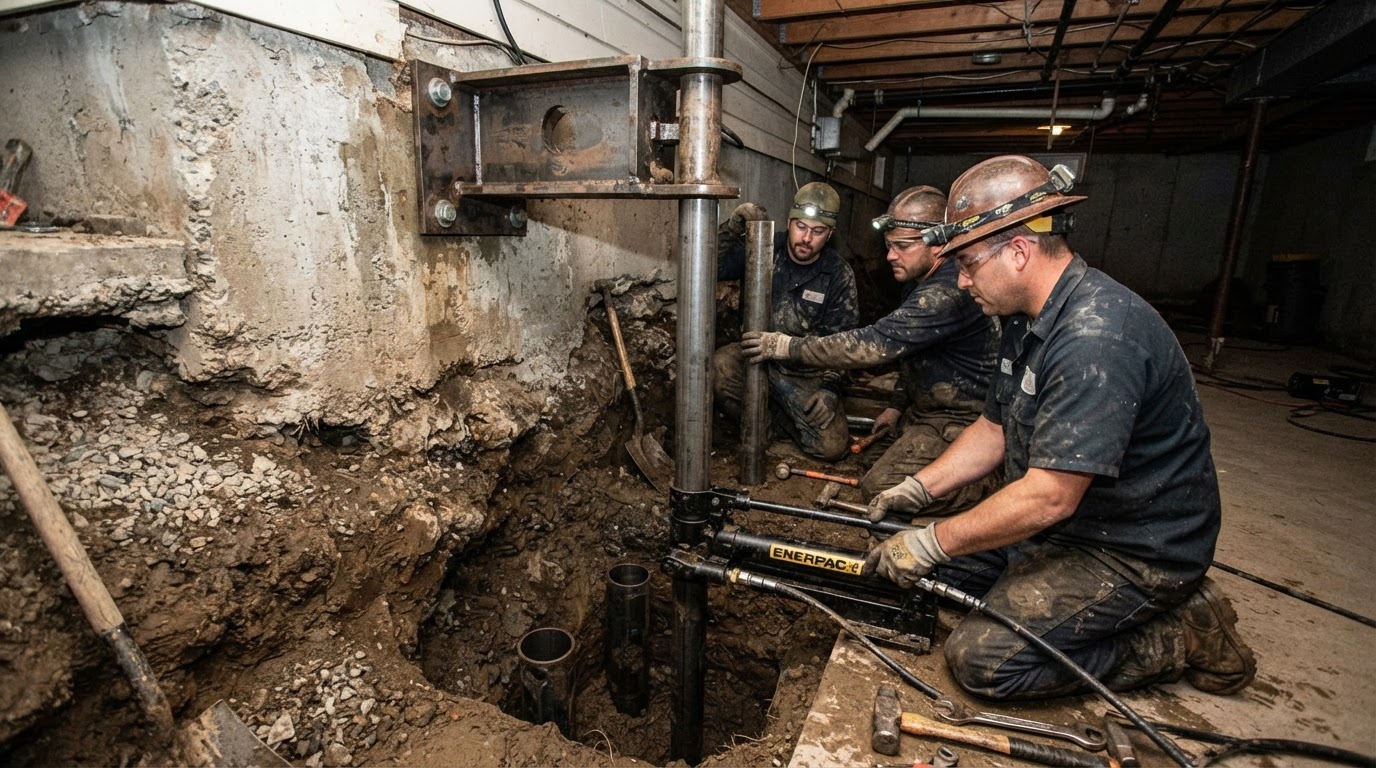
The repair depends on how far the wall has moved. For walls that have bowed but not severely, steel I-beam bracing or carbon fiber reinforcement can stabilize the wall and stop further movement — these are contained to the basement and don't require excavation. Wall anchors, which connect the wall to the soil outside, are used when more holding force is needed and do involve some exterior work.
If a wall has bowed too far to brace, it may need to be excavated, straightened, and rebuilt. That's the largest repair, and it's exactly what catching the problem early helps you avoid. The key point: a bowing wall can almost always be fixed, but the cost and invasiveness grow the longer you wait. Once a wall is actually bowing or leaning, that's a structural repair — read more on our structural foundation repair page.
What to Do Right Now
If you've found a horizontal crack, measure the wall's bow with a straight board, take a photo, and note the crack width. Don't seal a horizontal crack and assume it's handled — injection doesn't stop a wall from bowing. Then get a free inspection. We'll tell you whether the wall needs bracing now, whether it can be monitored, and what's driving the pressure so you can address the cause, not just the crack.
Frequently Asked Questions
Can I just fill a horizontal crack with sealant?
You can seal it, but sealing alone doesn't fix a horizontal crack because the problem is the wall moving inward, not water leaking through a gap. The crack will often reopen as the wall keeps bowing. Sealant makes sense for a cosmetic vertical crack, but a horizontal crack needs the wall stabilized first. Have it inspected before deciding on a repair.
How much bowing is too much?
There's no single line, but as a general guide, bowing of about an inch or more, or a crack wider than a quarter inch, warrants a professional evaluation. Even smaller movement is worth monitoring — measure it now and recheck in a few months. If it's growing, the wall is actively moving and should be stabilized before it gets worse.
Can a bowing block wall be fixed without rebuilding it?
Often, yes — if you catch it early. Steel beam bracing and carbon fiber reinforcement can stabilize a wall that has bowed but not severely, without excavation or rebuilding. Wall anchors are another option for more movement. Rebuilding is usually reserved for walls that have moved too far to brace. The earlier you act, the more likely a less invasive repair will work.